
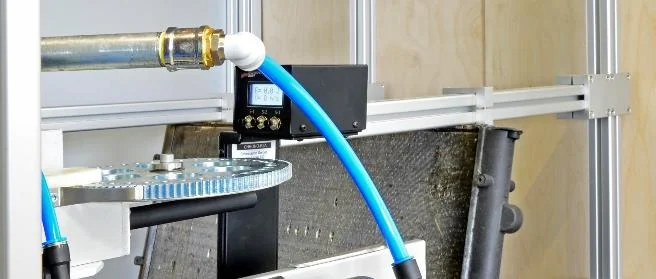
Velocity meter and magazine
Velocity meter at the barrel for setting the speed by pressure; magazine for up to 40 bullets.
The Stone Impact Tester from Hegewald & Peschke fires 4-5 mm projectiles with compressed air at up to 140 km/h to test how coatings, paints, plastics and vehicle parts resist stone impact.

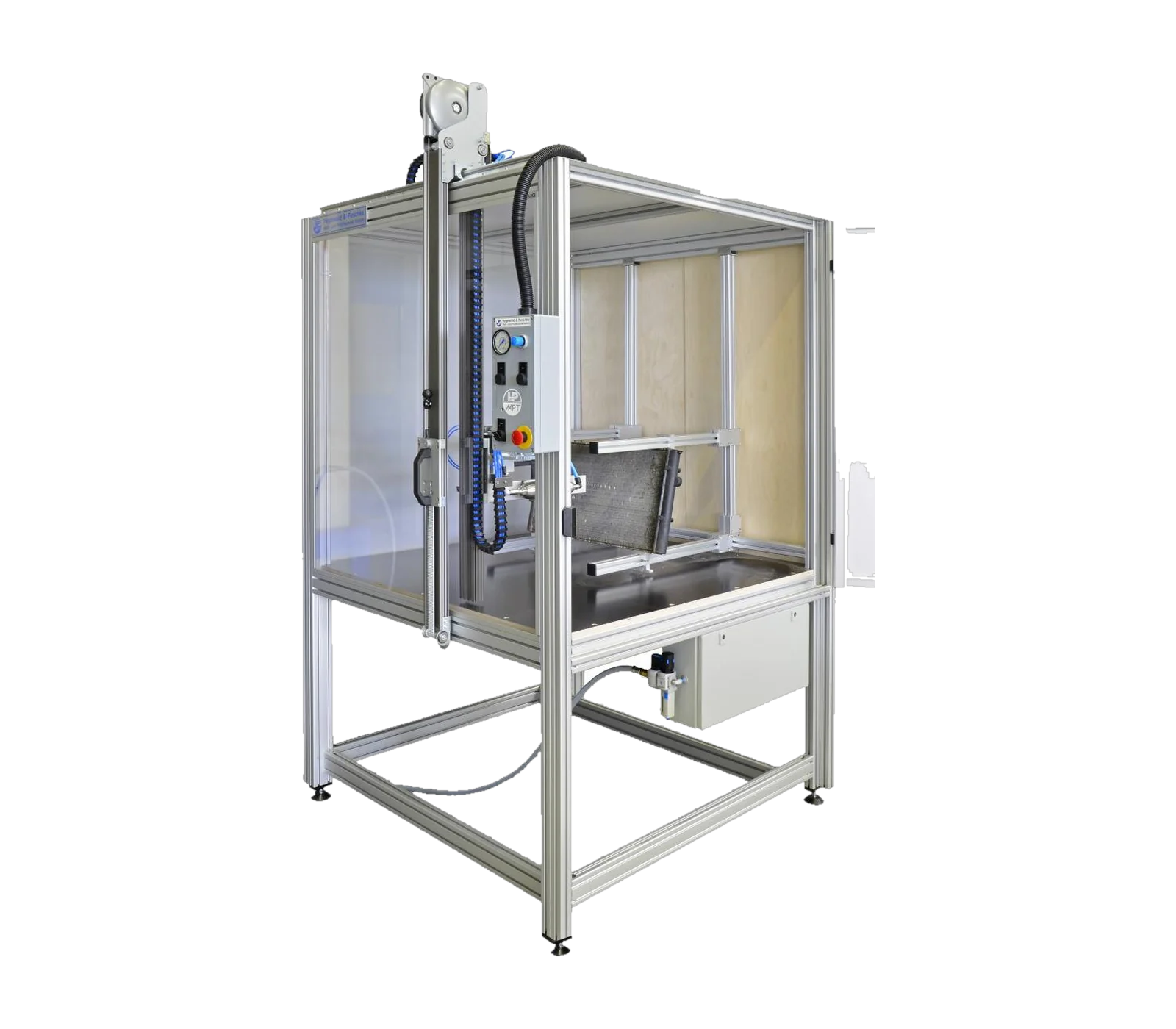
The stone impact tester determines the impact behaviour of materials and components, such as single-layer or multi-layer coatings, paints, plastic composites, textiles and vehicle parts. Small projectiles are shot at the specimen with compressed air.
It is used for objects exposed to stone impact, such as radiators, bonnets, wheel rims, windscreens, traffic signs, roofing materials, windows, plastics and composite materials. The stand is fully enclosed so that bullets and splinters cannot escape.
The projectile speed is set by the pressure and checked with a velocity meter, which allows defined impact testing beyond conventional grit testers and beyond the requirements of ASTM D 3170 and DIN EN ISO 20567-1.
Velocity meter at the barrel for setting the speed by pressure; magazine for up to 40 bullets.
Barrel slightly larger than the bullets, fed by a quick-opening valve from a pressure vessel.
Inclination around 1 or 2 axes, positions read from scales, distance 150 to >600 mm.
Closed on all sides, plywood rear panels, door monitoring blocks firing when open.
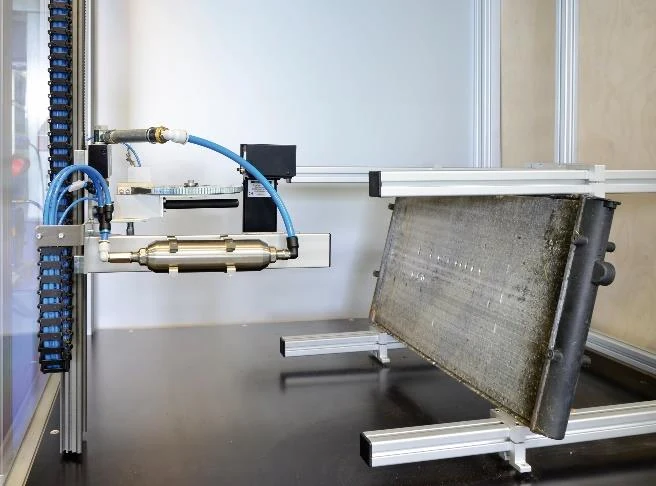
Stone impact tests on radiators set at a defined angle.
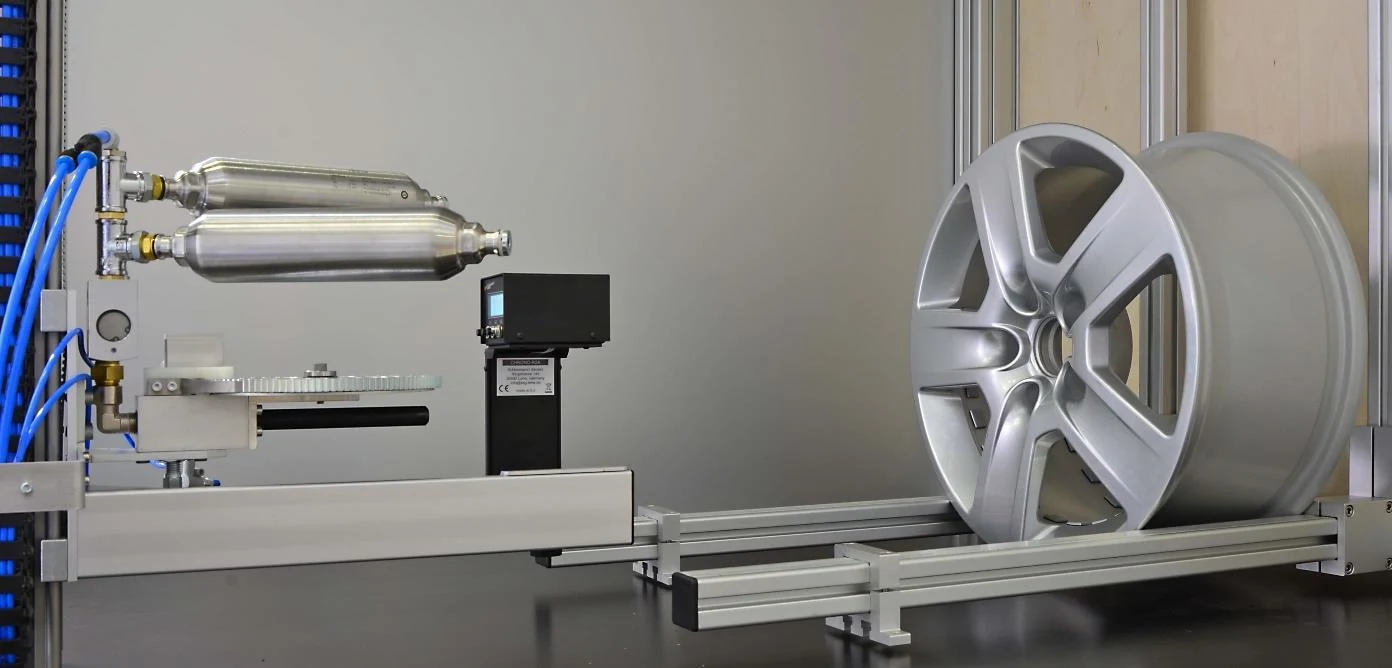
Impact resistance of rim surfaces and coatings.
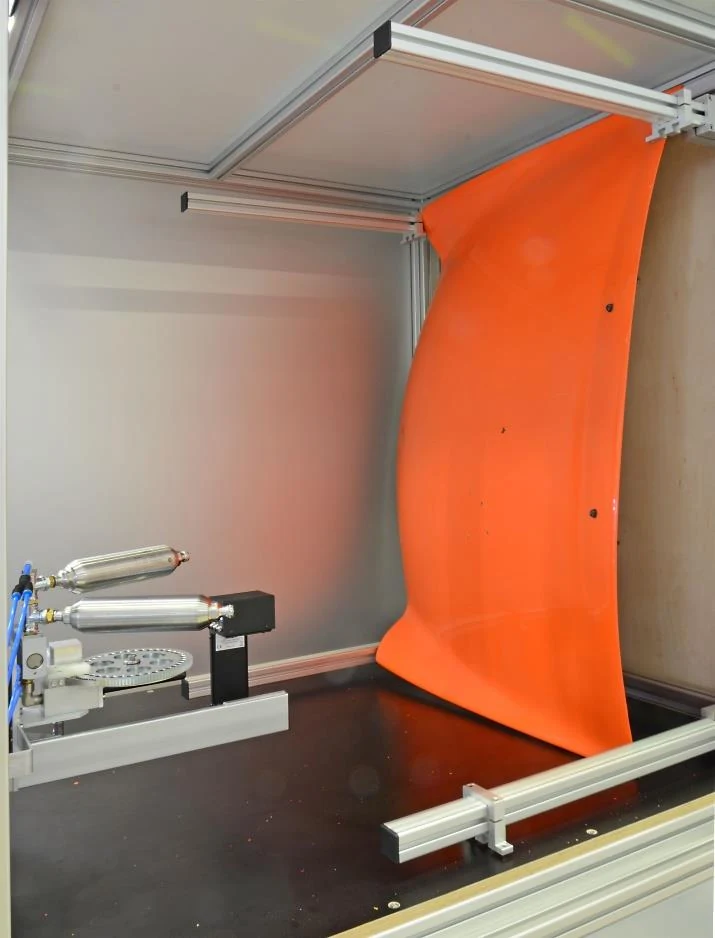
Stone chip behaviour of painted body parts.
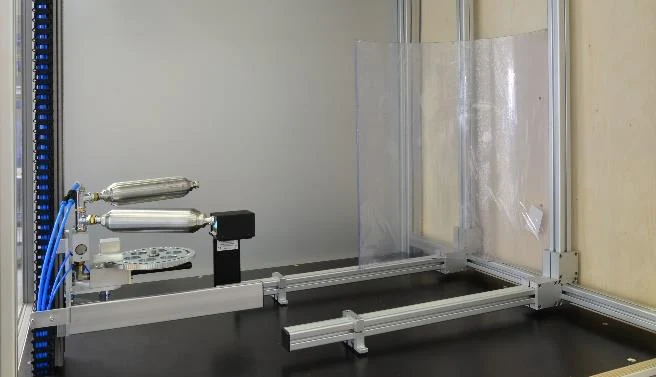
Multi impact tests on transparent panes.
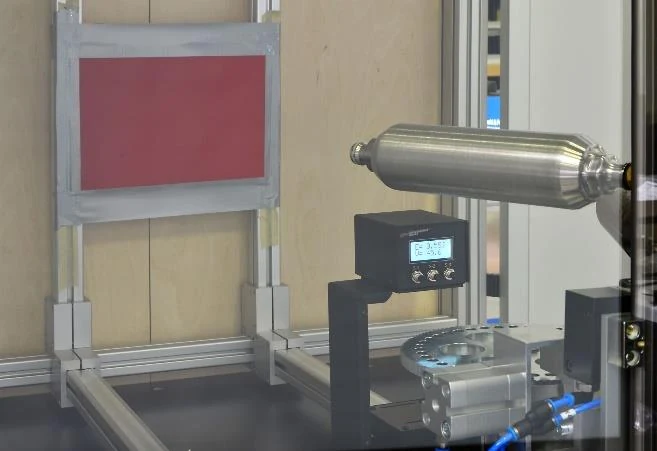
Multi impact tests on technical textiles, e.g. for awnings.
Share your specimens, sizes, coatings, impact speeds and test standards, and our Performance Engineering team will support you with the suitable product information.
Explore other products available within the same product category and open each page for complete technical details.
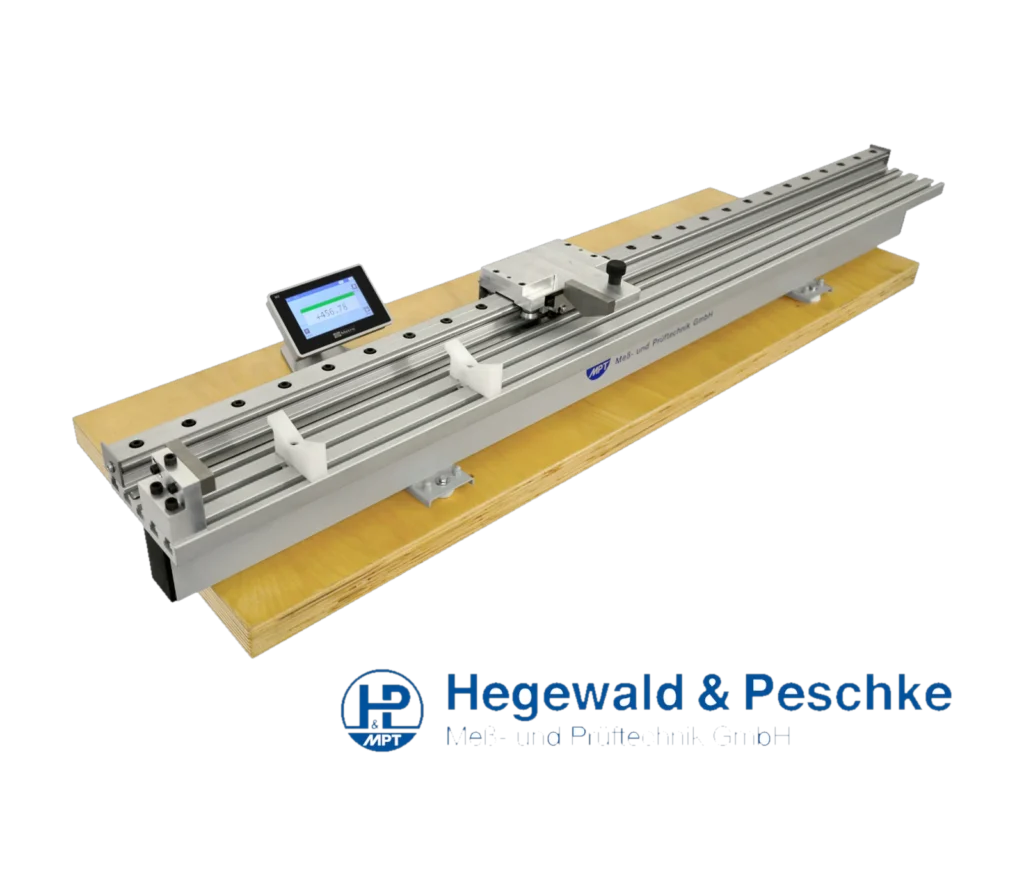
Digital length measuring devices for pipes, profiles, rods and long workpieces, in Light and Heavy models.
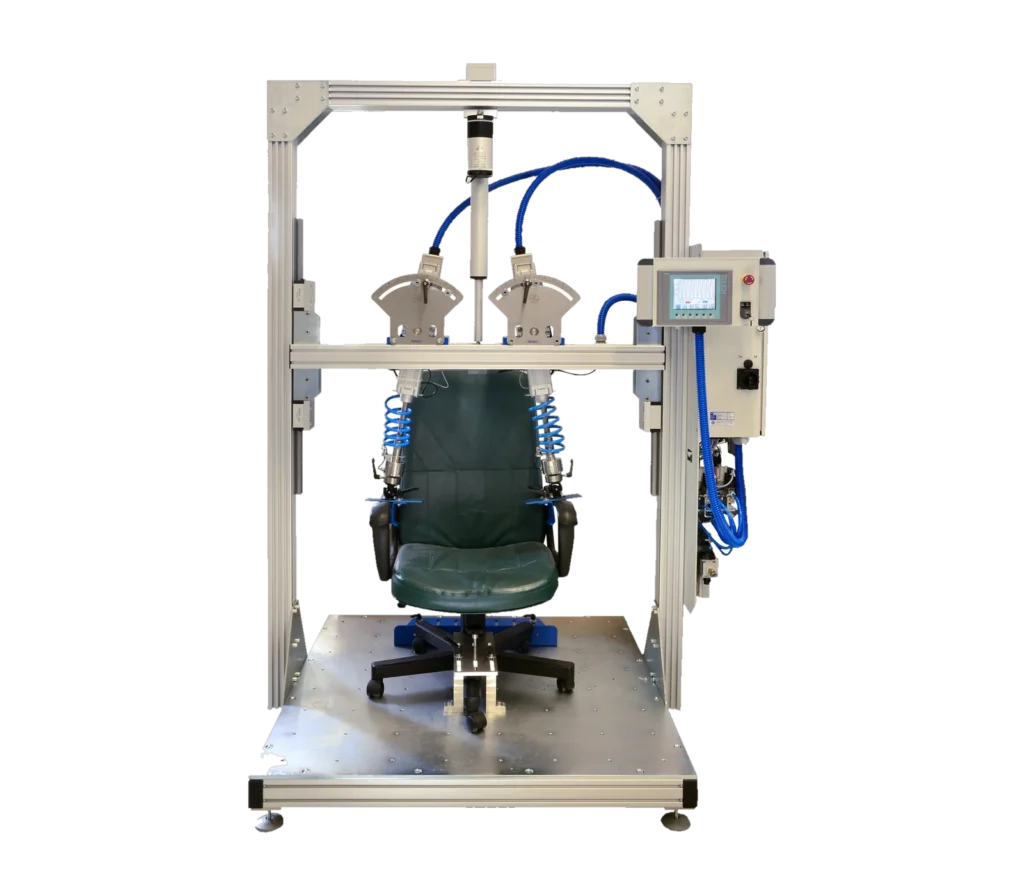
Modular furniture and component test rigs with freely positioned pneumatic and electric test axes.
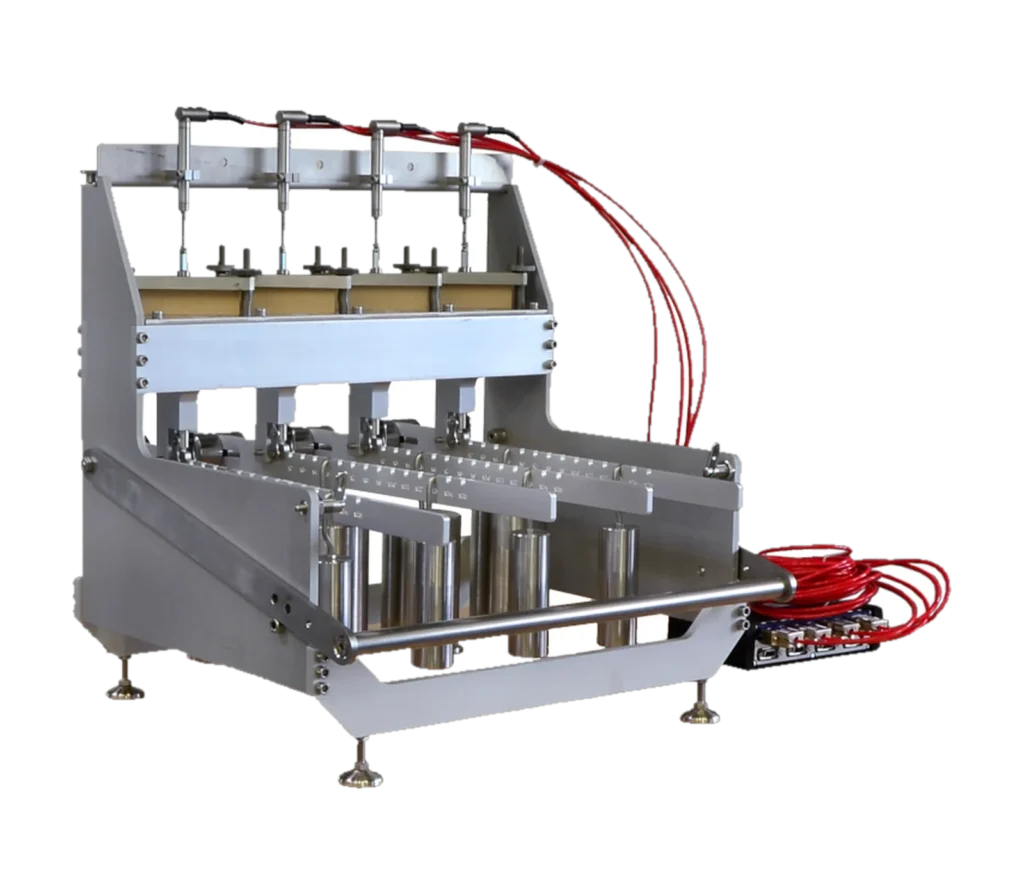
Weight-loaded creep devices for long-term compression, bending and tensile tests on cardboard and textiles.
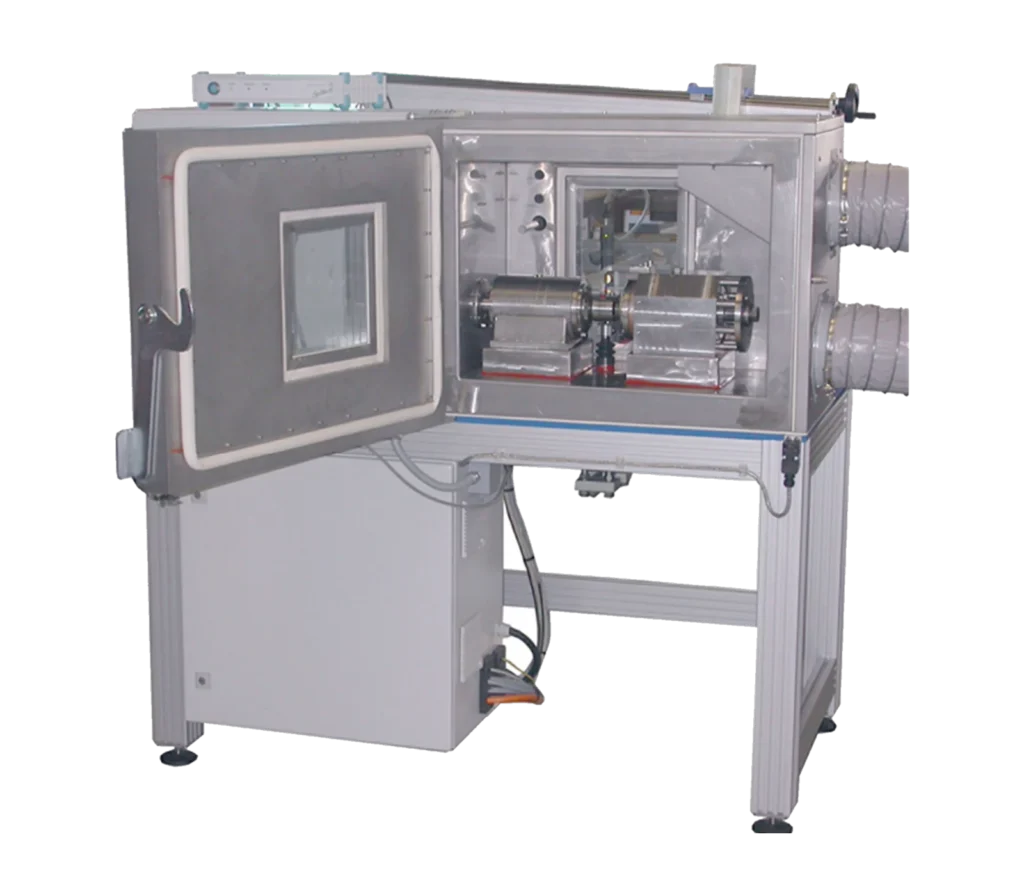
Friction and wear testing of metallic pin-cylinder pairs under controlled temperature and humidity.
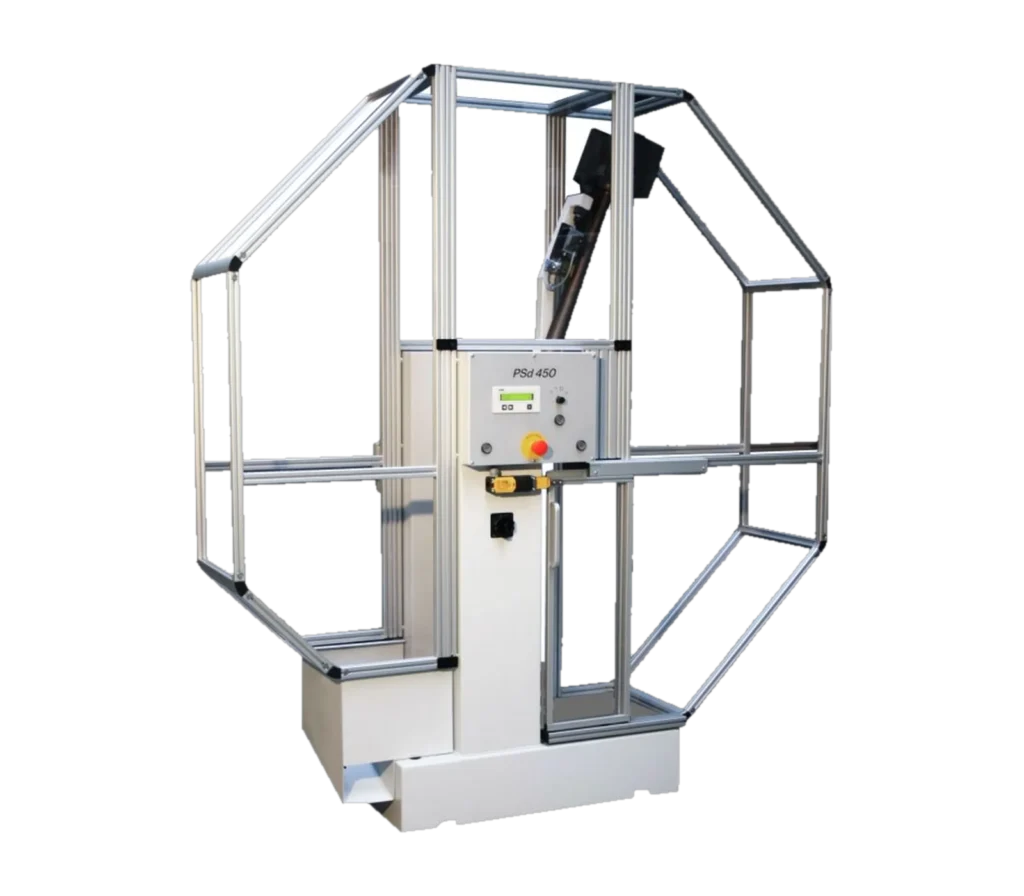
PSd 50, PSd 300/450 and PSd 750 pendulum impact testers for plastics and metals, with instrumented testing.
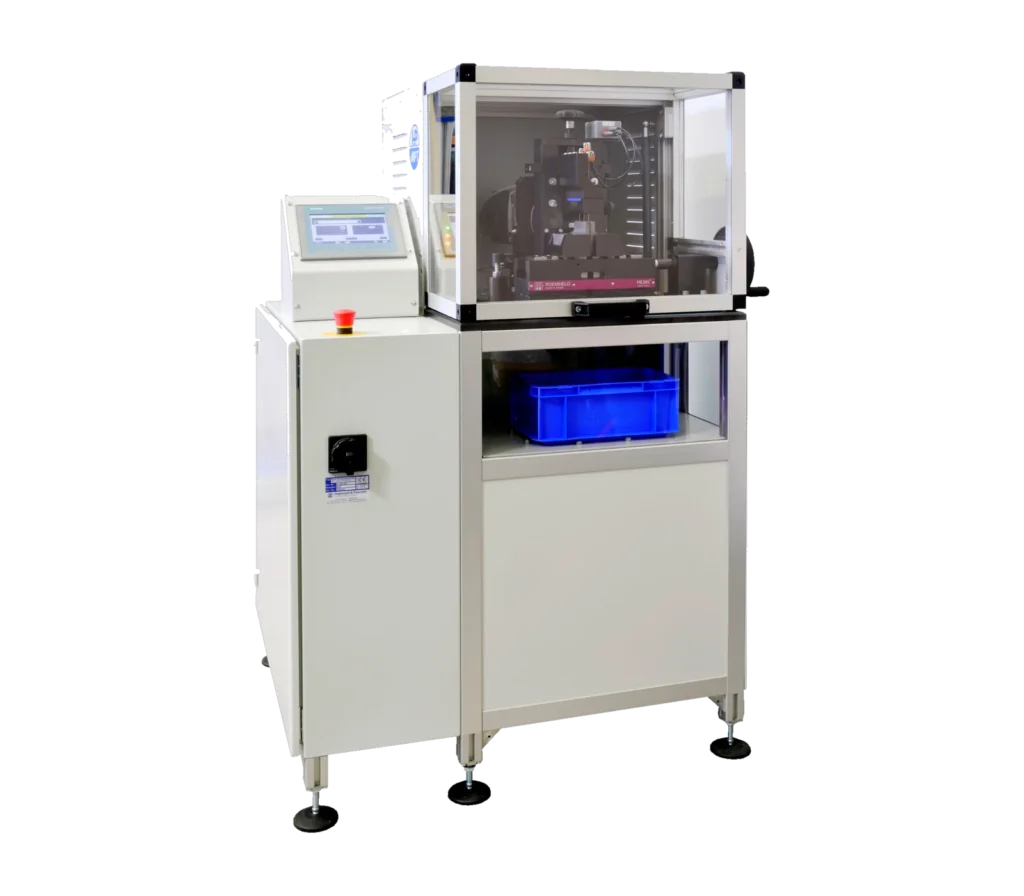
180° reverse bending tests on wires of 0.3 to 10.0 mm, with up to 3 specimens tested at a time.
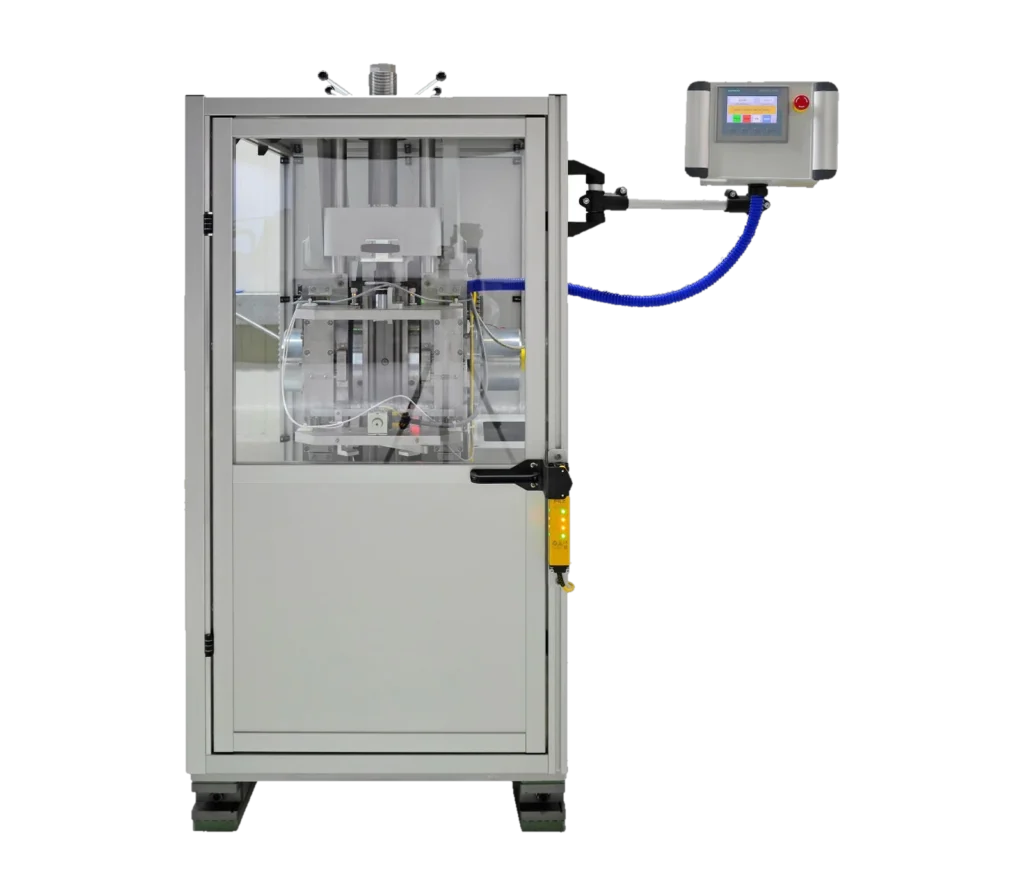
Highly dynamic tensile tests on composites, textiles and joints at up to 14 m/s and 350 s⁻¹.
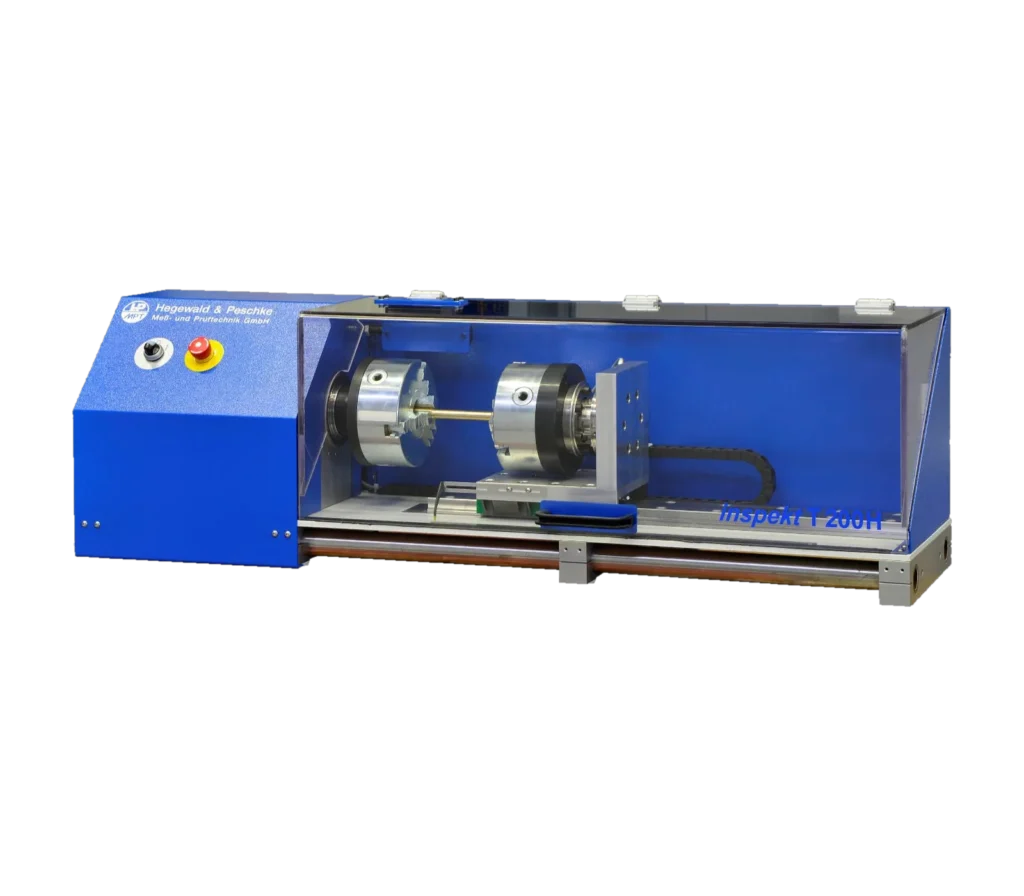
Tabletop, wire and high-capacity torsion testers from 200 Nm to 5000 Nm for static and cyclic tests.